THESIS PROJECT:
madwood

n. A deep dive into the design decisions necessary to craft the Madwood brand identity
THE problem
While NFTs and digital assets reshape views on art ownership, a significant gap remains in inspiring younger generations to participate in physical art collecting.
THE Solution
Authentic brands thrive by meeting their audience at the intersection of culture and accessibility. To translate physical art collection for a digitally-native generation, we reimagined value through a modern lens, balancing legacy with disruption. Strategic pillars for our approach included:
Onlyness Statement
Madwood is the only premier designer toy label crafting artisanal wood collectibles in partnership with Madison’s creative underground. Distributed through a blind box system, these figures serve as a form of cultural currency.
For the ambitious young adult eager to signal their unique identity and taste, Madwood is more than a product; it is a status-driven obsession focused on hunting the most elusive figures.
Foundation
Target Market Behaviors
Findings suggest that Gen Z is highly susceptible to immersive brand ecosystems that invite them into an immersive world(McDaid, 2025). This demographic prioritizes obsessive attention to detail; micro-elements that do more than just expand the brand narrative—they foster a secondary layer of participation, rewarding the viewer's desire for depth, discovery, and connection.

Synthesis
Target Market Motivators
Capturing the youth market requires more than just elaborate world-building. Modern Gen Z consumers demand that brands exhibit genuine fervor to secure their loyalty (O’Loughlin, 2025). The proposed solution must deliver value through immersive storytelling and brand interactions while ensuring that the primary brand experience remains anchored in an undeniable, authentic passion for the core product.

Solution
Target Market
Brand Strategy
Engaging the youth demographic necessitates a robust digital ecosystem. Madwood achieves this through immersive social media initiatives showcasing unique collections, strategic industry partnerships, and serialized narrative arcs synchronized with new product drops.

Voice and Tone
Target Market
Ambitious Gen Z (aged 12-28) collectors, curators of digital and physical culture who value exclusivity above all are the target market for the brand.
To engage this demographic, Madwood utilizes a distribution model with a proven track record of target market resonance.
Brand lore further drives youth engagement. Integrating interdimensional entities that emerge through creative minds offers a profound, immersive depth to the Madwood brand ecosystem.
Brand
Name
Madwood blends its Madison, Wisconsin roots with its primary medium: wood. This portmanteau defines the brand's local origin and artisanal construction.
The Madwood name is
multi-layered: reflecting both the angered expressions of the figures and the creative compulsion to bring these wooden entities to life in the brand's fictional lore.
Ultimately, Madwood represents a distinct fictional species. These figures act as a vessel for artistic vision and are categorized as such, positioning the brand alongside staples like Pokémon or Sanrio.
Arche-type
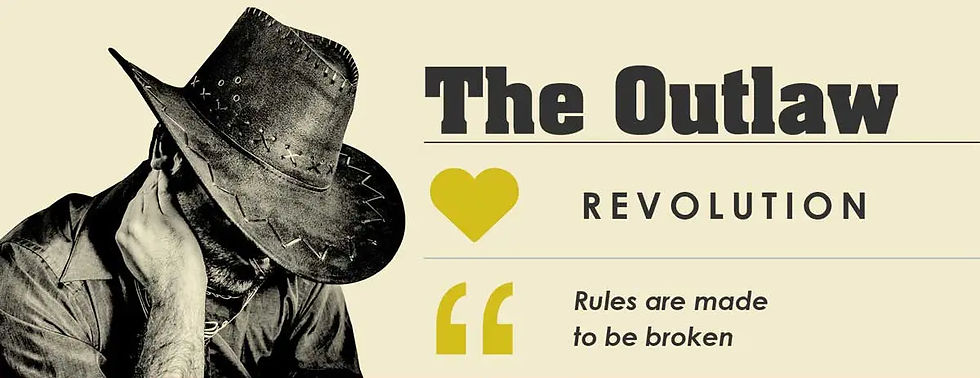
Embracing the Outlaw archetype, Madwood bridges traditional art collecting with the digital fervor of NFT culture.
By adapting scarcity models like blind-box releases and collectible cards, the brand disrupts conventional perceptions of luxury.
Madwood empowers a new generation of enthusiasts to find value in tangible, rebellious craftsmanship.
Tagline
&Slogan
“Take some madness with you” spins off of colloquial saying such as "All the crazy came with you", treating a wild nature as communable. In Madwood's lore, madness is a celebrated escape from the constraints of social norms.
Positioning Madwood as a bold statement piece is essential; these collectibles are meant to be worn openly, serving as a social catalyst for capturing the public's attention.
By making Madwood an essential lifestyle addition, this call to action inspires owners to integrate Madwood into their daily attire as they see fit.
Look and Feel
Color Rationale
REDS
Red functions as a catalyst for high-impact communication, historically utilized to command immediate attention (Kramer, 2022). Within the Madwood brand identity, this hue represents an exhibitionist brand identity, positioning the collector as a visible symbol of status. To maximize this visual friction, the palette integrates structural greys that embody the social status quo. This contrast allows the aggressive reds to effectively dissect themes of conformity, transforming a simple color choice into a narrative tool for rebellion and distinction.
Beyond its abrasive impact, red holds deep cultural significance as a symbol of fortune and hope. Rooted in Asian folklore—specifically the myth of the Nian Shou—red evolved from a defensive talisman into a hallmark of celebration and gift-giving. From the random thrill of the 'fukubukuro to its role as a favorable indicator in Eastern financial markets, the color bridges ancient legend with contemporary cultural currency (Lee, 2017). For Madwood, this dualism between rebellion and luck enriches the brand’s narrative focus.
REVISIONS TO COLOR
BLUES
Blue serves a dual purpose:
1. It acts as a strong chromatic counterpart to the dominant reds, as members of the primary color triad.
2. It pays homage to the five great lakes surrounding Madison, WI: Mendota, Monona, Kegonsa, Waubesa, and Wingra. This integration serves as an intentional visual buffer between the aggressive tones of the reds and structural greys.

This homage to the lakes that surround Madison is also presented visually by the blue in the city's flag.
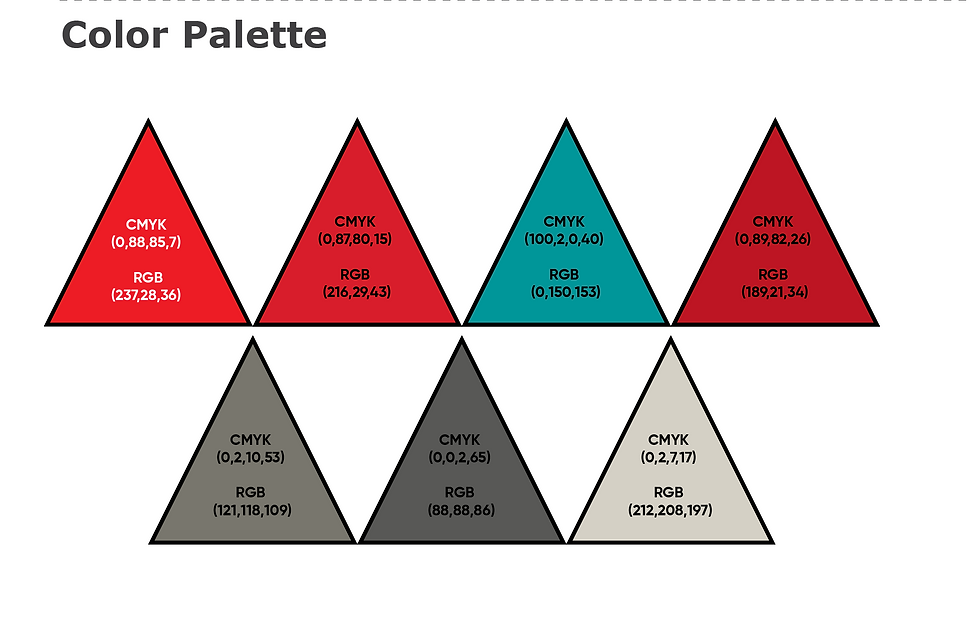
The brand’s visual impact was refined through precise color shifts. Though the original palette utilized three reds, one blue, and three greys, the specific saturations and visual harmony systems were updated to optimize digital vibrancy. This evolution ensures the brand cuts through the noise with superior clarity.
Strategic methodologies are vital for anchoring brand identity. By implementing a systematic color hierarchy, we generated a more impactful visual engine. The original Red 189, 21, 34 was eliminated, pivoting to Kegonsa Cerulean to instill sharper contrast. The foundational color scheme—Mad City Red and Kengosa Cerulean—powers vector graphics and logos. Our secondary color scheme, Fukubukuro Crimson and Mendota Teal, elevates headings and bold typography. Finally, the accent suite of Foggy Memory, Dark Thought, and Grey Matter provides a sophistication for body copy and supporting graphical elements.
Imagery
Visual storytelling is the heartbeat of this project. Madwood’s visual identity utilizes illustrations, active use cases, and Madison-specific geography to build a cohesive narrative. The digital illustrations highlight the creative spirit of creative collaborators, while lifestyle photography reestablishes the body as a mobile gallery.
Color Palette
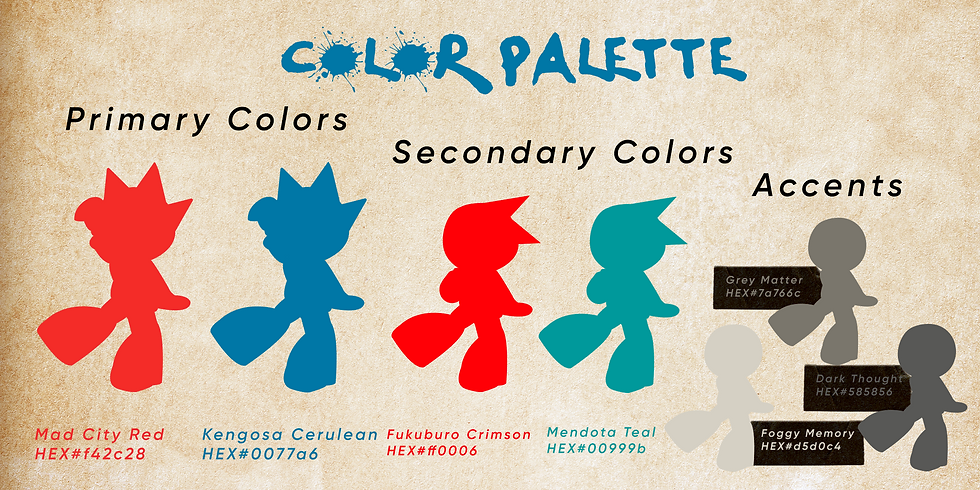
Madwood utilizes a curated spectrum of dual reds, triple greys, and twin blues. This selection anchors the brand’s intensity, mirroring the bold themes of exhibitionism at our core. Each color in Madwood’s palette tells the brand's story.
Gen Z demographic prioritizes obsessive attention to detail; micro-elements that do more than just expand the brand narrative—they foster a secondary layer of participation.
GREYS
Greys define the structural baseline of the visual identity system, representing the rigid societal norms Madwood aims to disrupt. Historically symbols of order, these tones provide the necessary contrast for Madwood's exhibitionist mission. By grounding the brand in these architectural shades, the opportunity to highlight the act of standing out as a vital rebellion against the mundane is crucial to communicating value to the youth target market.
The Madwood brand manifests as a series of avant-garde collectible charms, fueled by a subculture of obsession. An invitation is presented to all consumers to lose themselves in the brand's mania. This hypnotic state is visually represented through repeating rings, echoing the classic animation trope to present aggressive passion as a trance-like state.
The eyes serve as the signature Madwood series. This piercing visual motif encapsulates the brand's core identity, merging manic intensity with organic craftsmanship. While the 'mad' persona radiates through their gaze, the wood grain is immortalized in the concentric rings of their pupils.

Line + Shape
LINE
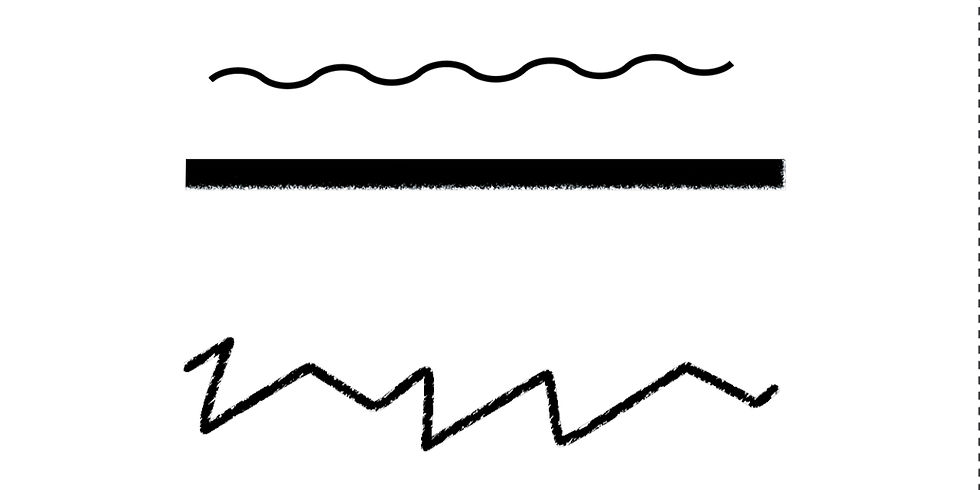
In the Madwood identity system, line work highlights raw individuality, rejecting corporate sterility in favor of a visceral, hand-drawn aesthetic.
Each stroke vibrates with a uniquely human rhythm, serving as a subtle nod to the rarity and deliberate imperfections intrinsic to Madwood's hand-crafted nature. These aren't just outlines; they are signatures that prioritize grit over gloss.
Typography
Exhibition remains the center of the Madwood brand. This theme is consistent in Madwood's typographical choices.
Heading
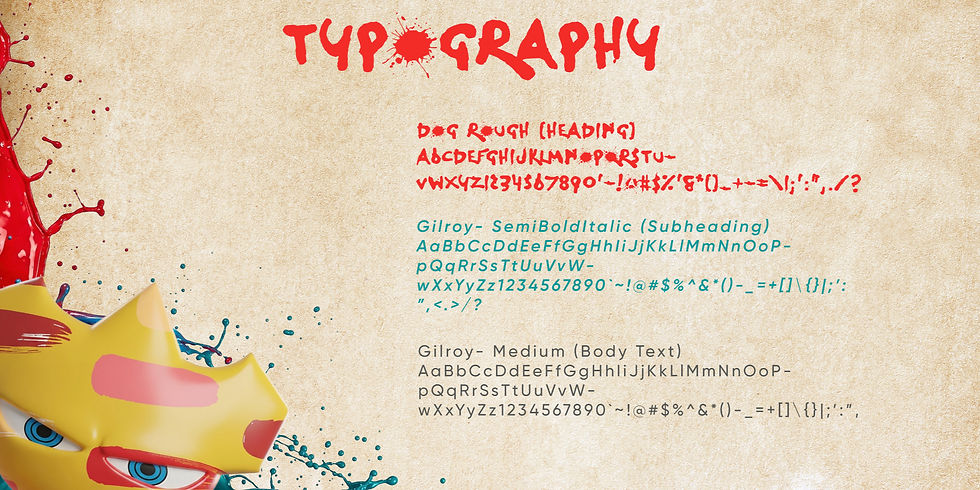
For the heading typeface, Dog Rough was the choice. Dog Rough is reminiscent of graffiti and paint splashes. The allusion to artistry and creativity is immediately apparent. Dog Rough's stylistic flair serves to reinforce Madwood's previously established splatter motif.
Subheading
The heading typeface, Dog Rough is bombastic and in-your-face but lacks the readability necessary for more information-heavy text. When deciding on a subheading, the intention was to continue the narrative of exhibition visually. A more subtle typeface provides a sense of calm for Dog Rough to upset. For all the reasons listed above Gilroy Semi Bold Italic was decided upon.
Body Text
The body text serves as the main instrument for information. The most important quality for the body text typeface to have is readability. With most of Gen Z conducting brand interactions on digital platforms, ensuring the body text was a sans serif typeface secures readability on screens. Remaining consistent with the other typography choices, the font Gilroy Medium effectively establishes a status quo that makes the headings choices stand out .

SHAPE
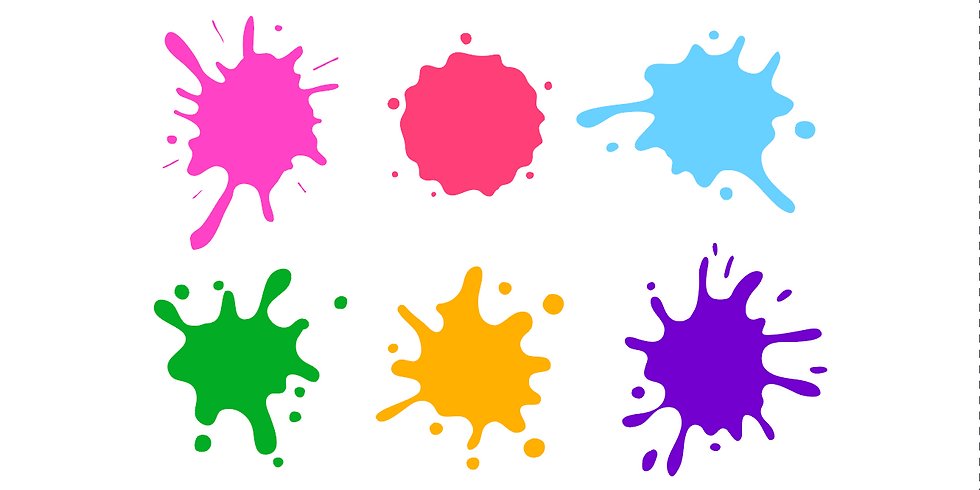
This kinetic pulse flows into Madwood’s shape language, utilizing erratic splatters to mirror the untamed energy of street art. These organic forms highlight the gritty, artisanal soul within every handcrafted collectible piece.
Logo
Ideation
During the ideation process, the objective for Madwood was to synthesize custom hand-lettering with distinctive character iconography to articulate exclusivity and artisanal quality through a lens familiar to collectors. Iterations 13, 18, 24 & 29 best embodied this vision.
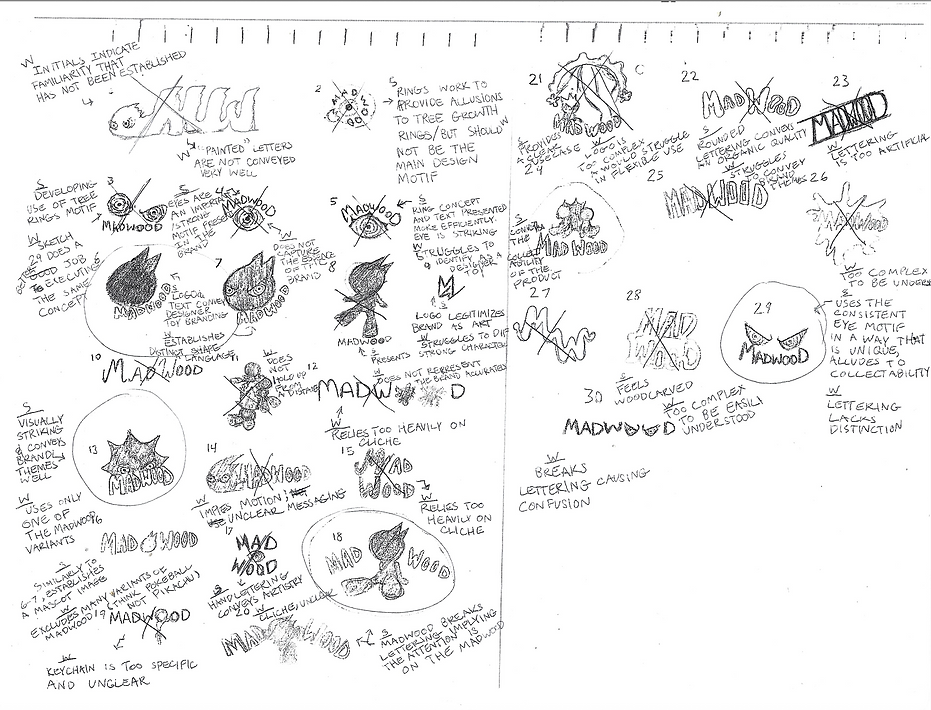
Concept 13 leveraged the psychological power of the gaze; eyes serve as a primary conduit for human connection and emotional resonance (Urban Optiks, 2024) positioning the product as a provocative statement piece that invites dialogue. Concept 18 focused on fluid typography to mirror the brand's bespoke origins, utilizing a minimalist character design to enhance the mystery of the blind-box distribution model. Concept 24 extended this narrative by showcasing a series of figures, directly signaling the system of collectability that defines the Madwood ecosystem. Concept 29 loops back at the eye motif once more, but does not match the glare with any implied physical form to highlight that the signature eyes are the only consistent trait between figures. Each of these directions prioritizes a unique element that establishes how the brand should be interacted with, ensuring the brand operates as a cultural artifact rather than a mere commodity.
Reiteration + Refinement
With potential options selected, the next step of the logo design process is reiteration and refinement.
This stage involved evaluating logo prototypes against new research data. It was important to calibrate every visual element to ensure the logo serves as a potent communication tool for the brand values.
The findings below articulate the complete reiteration and refinement process through the lens of the Madwood brand identity.
Option 1
Concept 1 introduces a combination mark, integrating bespoke lettering with a logomark picturing a "Rare" Madwood's head sculpt. A combination mark format was decided upon to increase brand recognition on digital platforms (Shmarel, 2025). The design underwent a rigorous evolution, testing various spatial relationships between elements. While the initial wordmark served as a peripheral accent to the logo, this arrangement overemphasized the icon at the expense of brand legibility. To alleviate this woe, the final design features a structural alignment with the logomark centered vertically above the wordmark.
Option 2

Concept 2 employs a combination mark featuring assertive hand-lettered typography. The refinement process involved multiple iterations to test the specific orientation of the "Very Rare" head sculpt, alongside the spatial dynamics of the wordmark. By prioritizing the most elusive character archetype, the design creates a psychological anchor that elevates the perceived value of rare Madwood. The intentional upward visual flow from the lettering to the head sculpt establishes a clear hierarchy, encouraging the collector to associate a successful acquisition with prestige.
Option 3

Concept 3 utilizes a combination mark consisting of a logomark depicting a silhouetted "common" Madwood figure and expressive, bulbous hand-lettering. Early prototypes explored positioning the figure as a central anchor that physically bisects the name; however, this approach was discarded to prevent potential phonetic ambiguity regarding the brand's name. This refinement led to a vertical stack arrangement, ensuring clear legibility while maintaining the playful, street-influenced aesthetic required for broader cultural recognition.
Option 4

Concept 4 features a combination mark integrating three distinct Madwood figures with a custom handwritten wordmark. While the preliminary sketches showcased full-body figures in linear alignment, the iterative process led to a strategic simplification, focusing solely on the head sculpts. This refinement allowed for more detailed characterization, with each head meticulously designed to signify the first three categorical rarities within the Madwood ecosystem (Common, Rare, and Mad Rare).
Option 5

Concept 5 introduces a combination mark featuring the universal Madwood eye motif as the primary logomark alongside a hand-lettered wordmark. While the initial sketch closely aligned with the final vision, extensive testing of typographic assets and spatial compositions allowed for precise refinement. The brand narrative explores multi-layered symbolism: the concentric ocular rings simultaneously reference organic tree rings and the traditional animation trope of using circular pupils to depict a manic, trance-like state. This deliberate focus on the gaze provides a cohesive visual thread across all rarity tiers, establishing the eyes as a highly effective and recognizable anchor for the brand identity.
Option 6

Concept 6 integrates the universal eye motif with a hand-lettered wordmark to form a cohesive brand anchor. While the initial sketch closely resembled this final iteration, rigorous testing of typographic assets and spatial compositions allowed for precise refinement. The brand narrative explores multi-layered symbolism: the concentric ocular rings simultaneously reference organic tree growth and the classical animation trope of circular pupils depicting a manic, trance-like state. This deliberate focus on the gaze provides a consistent visual thread across all rarity tiers, establishing the eyes as a highly effective identifier. Furthermore, the typography in Concept 6 utilizes a distressed, grungy texture to instill a sense of underlying structural rigidity (Garcia, 2024). This stylistic choice reinforces the brand's gritty, artisanal soul while ensuring the logo remains a potent communication tool.
One user might showcase a single high-tier artifact as a centerpiece; another might prefer the kinetic energy of several charms hanging from a daily bag. Because these journeys offer different emotional connections, concepts 2 and 5 were both deemed essential.
Madwood’s logo selections reflect two distinct paths of consumer expression. While Madwood's core essence focuses on bold exhibition, the practical application shifts based on the collector.
The process of reiteration and refinement had left two standout logo designs for the Madwood concept: Options 2 and 5.
Final Logo
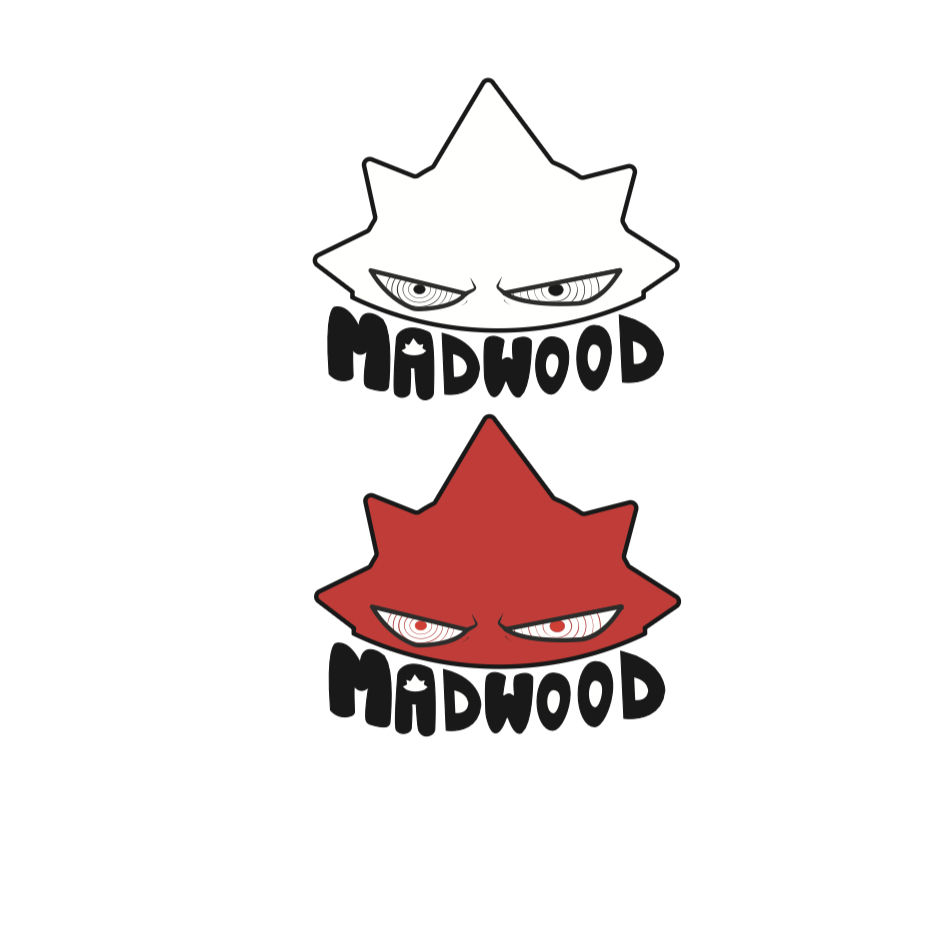
Option 2 was chosen for its aspirational qualities. Madwood operates in this odd space of being part-toy, part-artwork, and part-accessory. With so many things to consider, presenting consumers with a clear goal is invaluable.
Option 2
By showcasing MadRed—the flagship chase figure from the initial collection—as the central focus, the brand establishes a powerful icon. This character serves as the primary face of Madwood, evolving into a mascot that anchors the entire visual story.
Placing the Madwood front and center also further enrichens the brand lore.
Take for example proven success cases like Sanrio and Pokémon. These media giants use character to build a connection with their brand that transcends one form of media. Subcultures are built entirely off of collecting merchandise of one specific character.
To compliment the cartoon inspirations as an allusion to madness, the bespoke wordmark is presented in a whimsical fashion. The soft edges help to make the brand feel authentic in its expression.
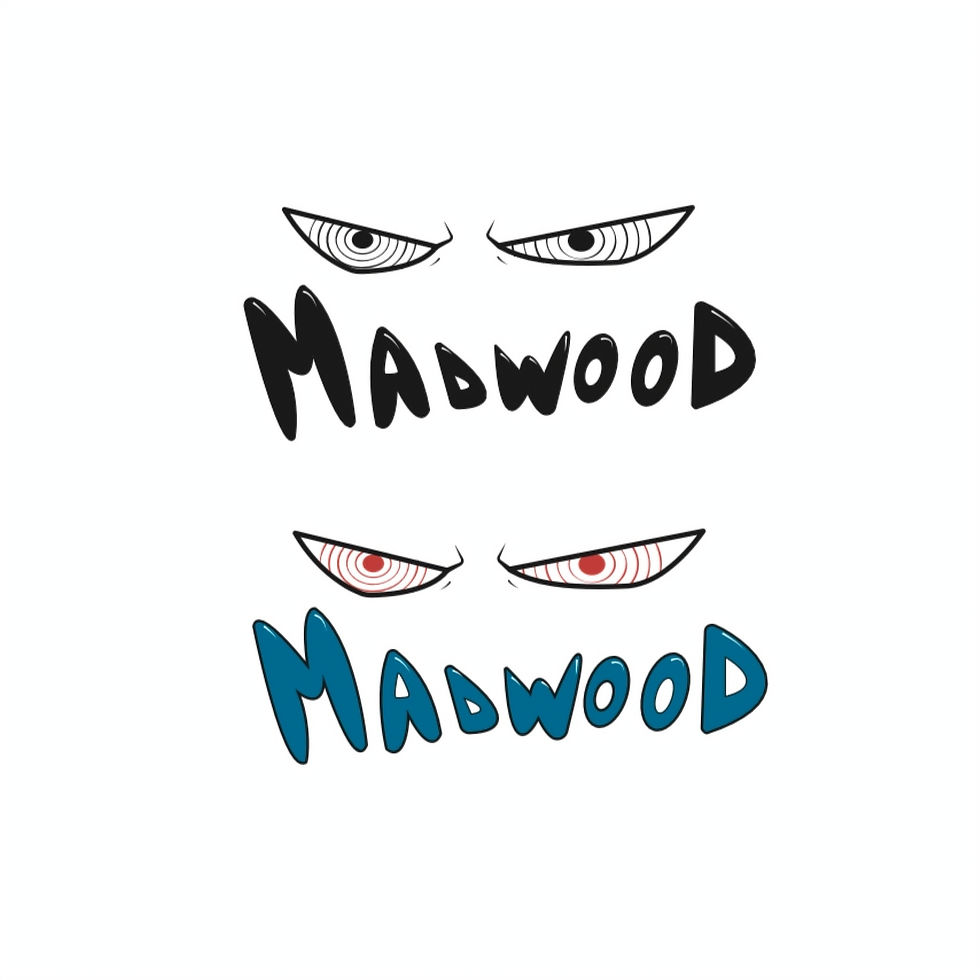
Option 5 was chosen for its transferability and punchy tone. The Madwood eyes take the main design real estate in this composition. By emphasizing the only consistent design trait in all Madwood, consumers have the opportunity to foster a connection that can be uniquely their own.
Option 5
Research on similar designer toy brands in the market has proven that a brand motif tends to be present in their logos. The motif tends to be a consistent design element on their product that can be seen in the same vein as a signature.
Decision
The strategy involved merging the most impactful elements from the leading concepts. The MadRed head sculpt was updated for better alignment with the physical toy designs. To unify the aesthetic, the palette was adjusted to match the Madwood identity system, specifically adopting Mad City Red and Kegonsa Cerulean for high-impact contrast. This deliberate color choice underscores the central importance of MadRed within the brand's unique collector culture.
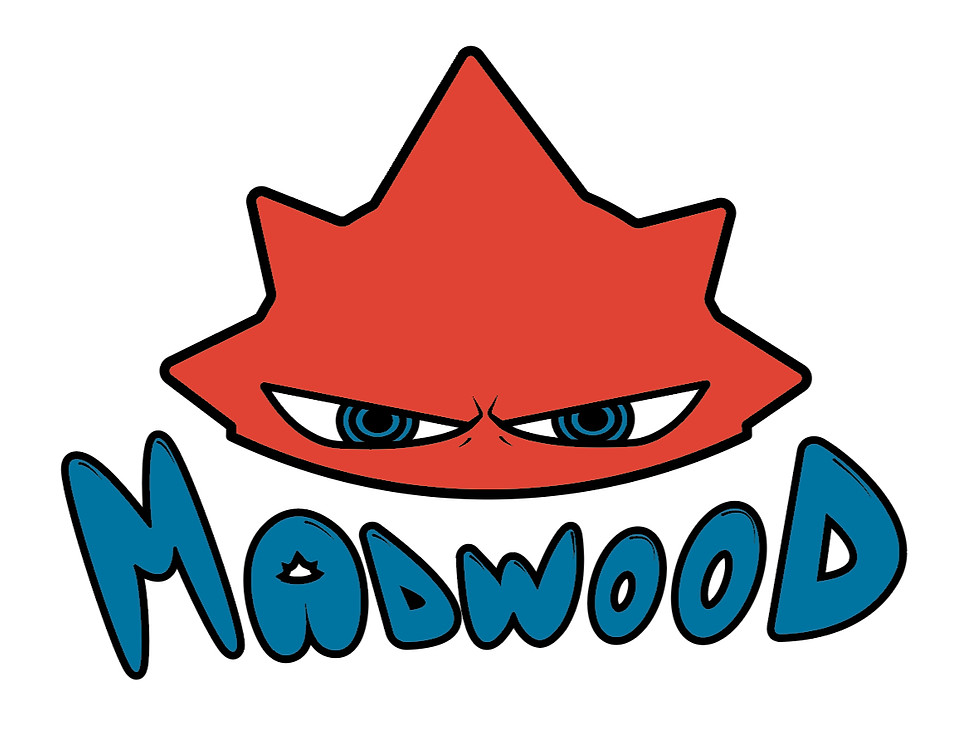
Derived largely from Option 2, the wordmark was refined to better integrate with the brand narrative. Madwood's mythology revolves around a Lovecraftian impulse to summon these creatures into our realm. This conceptual anchor is visualized in the letter 'A', where the negative space is carefully sculpted into the silhouette of a Madwood head.
Logo Guidelines
For use on brand apparel /accessories and social media
For use on brand apparel /acessories and social media
For use in promotional material


Brand Media Assets
Sketches
High-quality presentation frameworks are vital for anchoring a brand’s identity. Exceptional assets transform basic logos or mood boards into immersive narrative vehicles that articulate core principles through intentional design (Bokhua, 2022). Every component must have a strategic justification; any feature that fails to reinforce the visual story risks wasting valuable real estate or, even worse, diluting the message and confusing potential collectors (Airey, 2026).
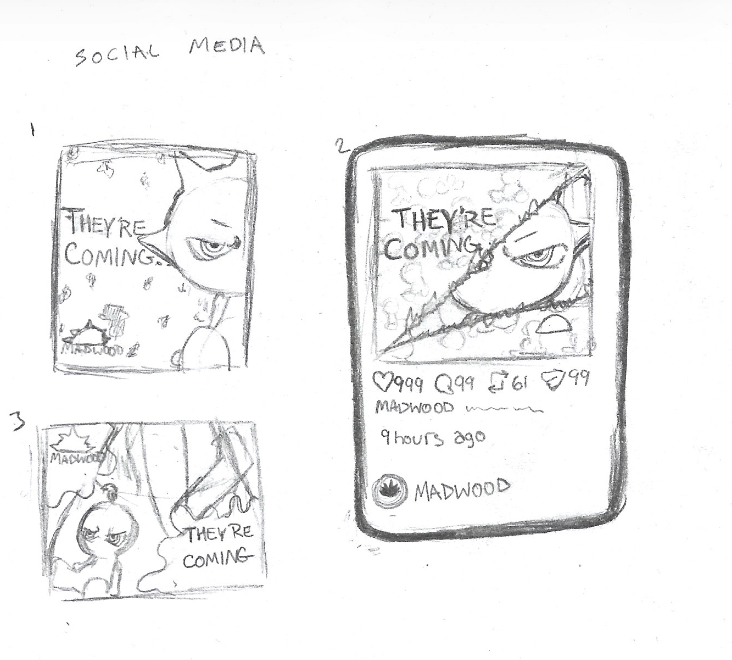
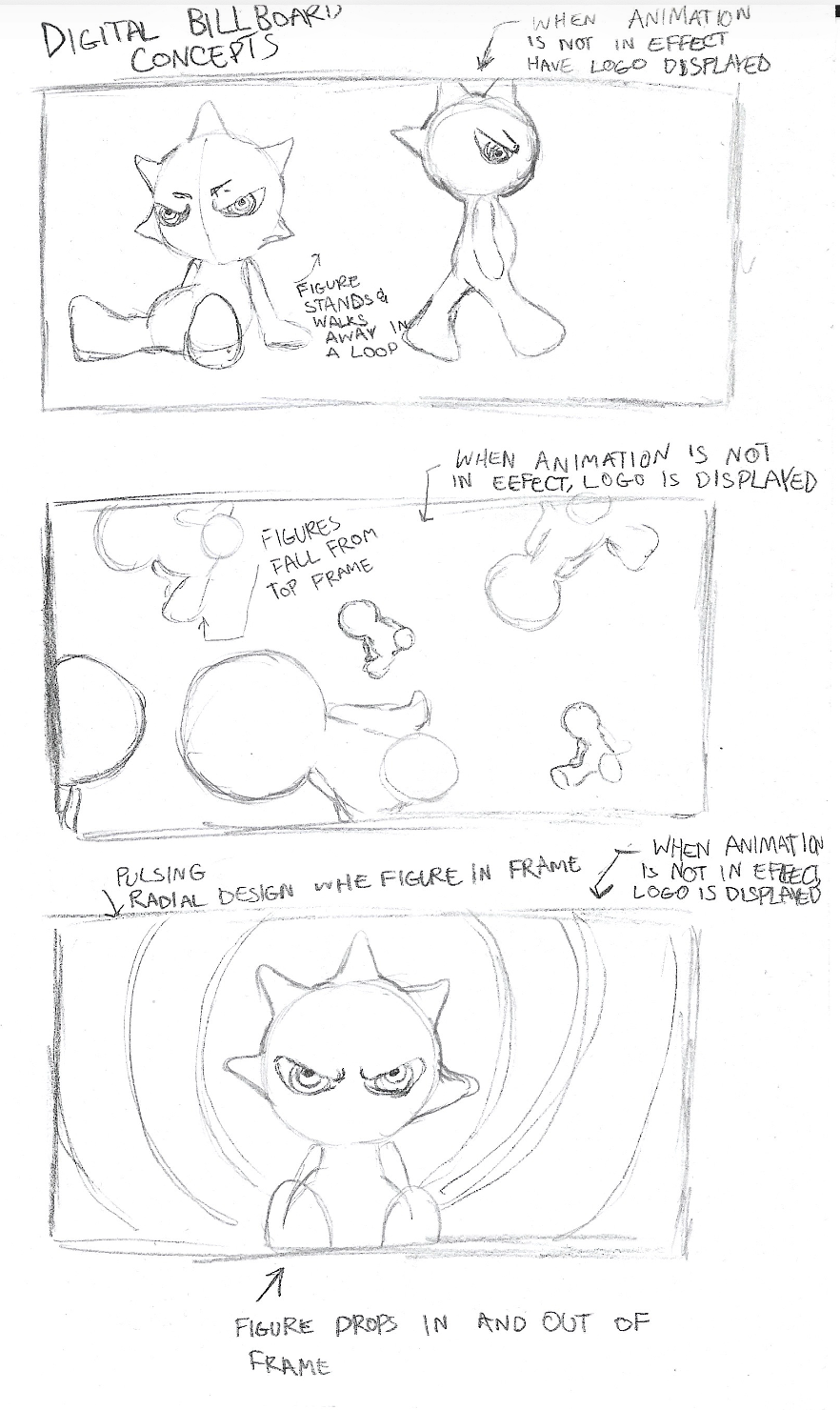
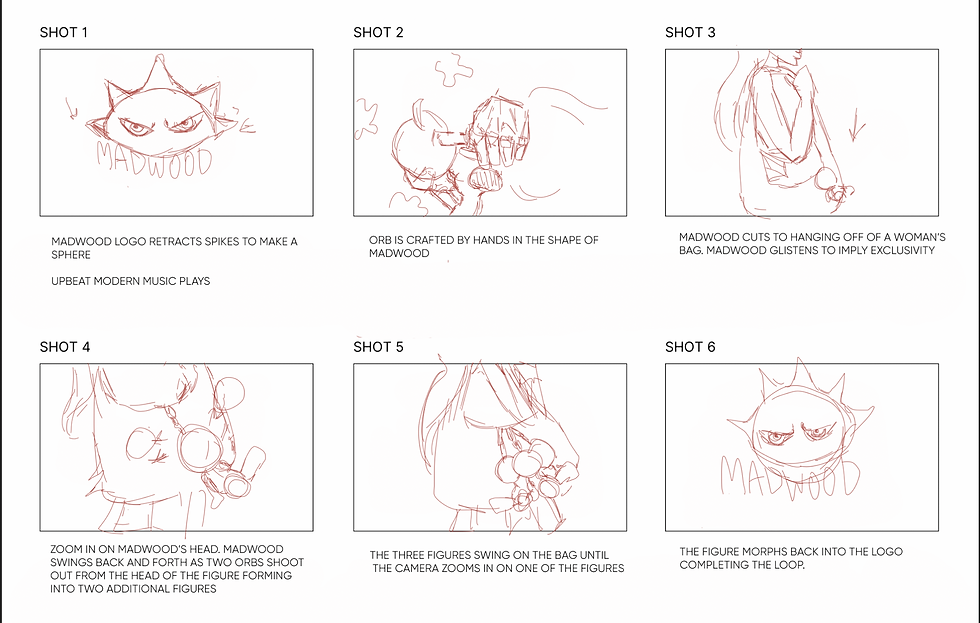
The Madwood narrative builds upon a complex fusion of historical lore and fictional mythology. These entities are designed as interdimensional beings intended for collection. Simultaneously, the brand serves as a platform for Madison-based artisans to distribute their exclusive woodwork and graphics across the country. Centered on craftsmanship and rarity, initial sketches envision a metaphorical takeover. By incorporating hypnotic visual motifs, the design suggests an inevitable attraction to the brand, making it nearly impossible for observers to resist the allure of this expansive collector subculture.
To ensure that these themes are carried over in all modes of communication, ideation began on developing brand media assets for the Madwood brand.
Letterhead
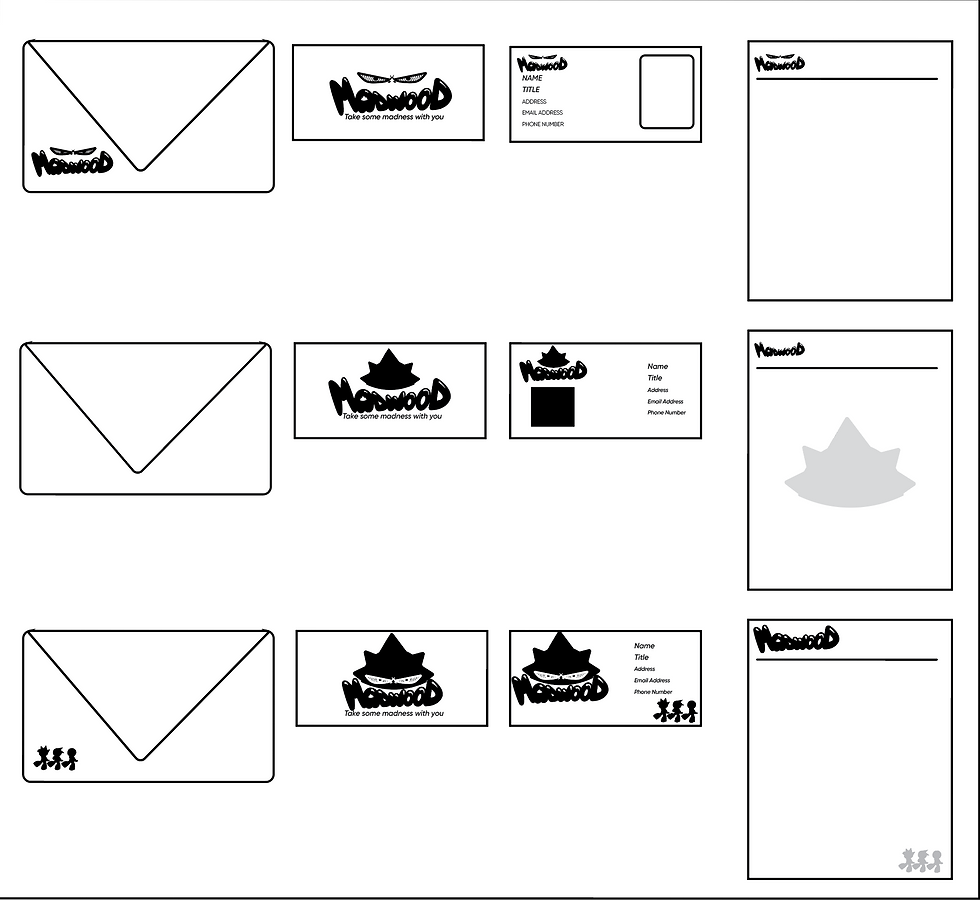
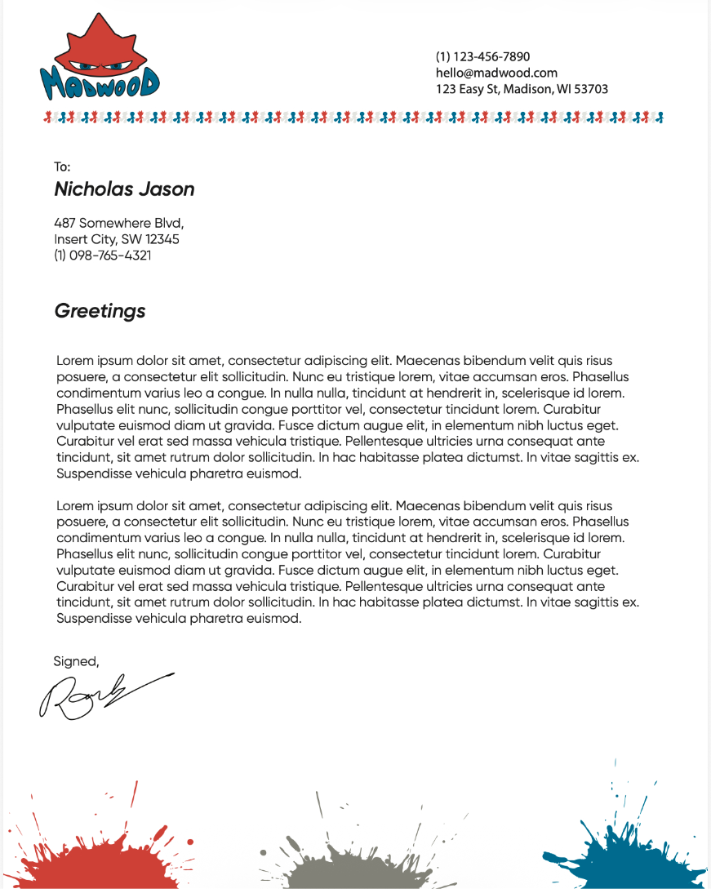
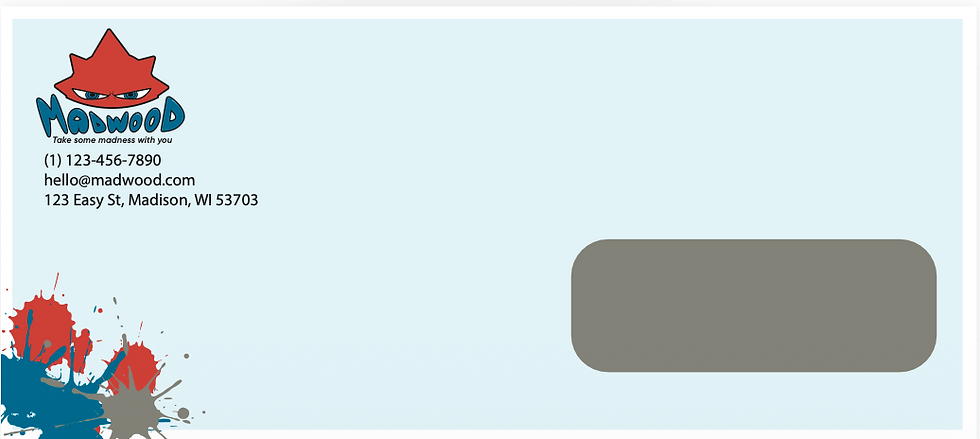
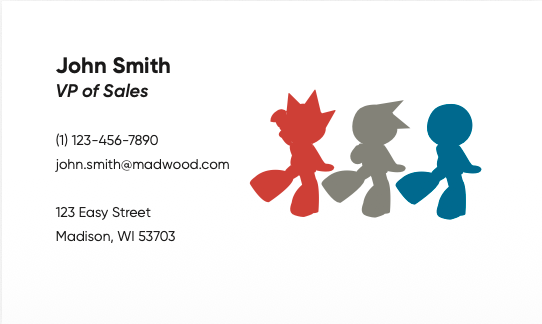
Professional letterheads must include the brand logo, brand address or business communications, addressee, a salutation, signature area, letter date, letter body and a sign-off. Envelopes also require a field for indicia, a window, a return address. Under this criteria, the Madwood brand identity system was used to craft a letterhead package.

Social Media
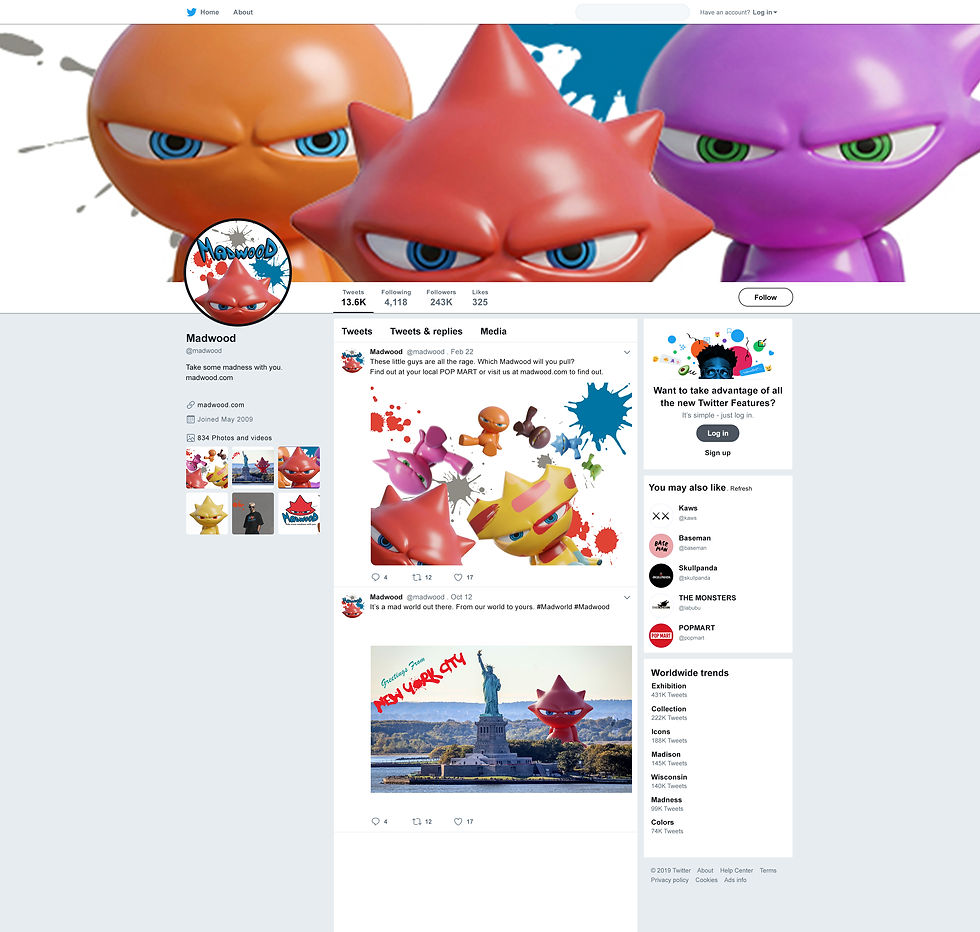
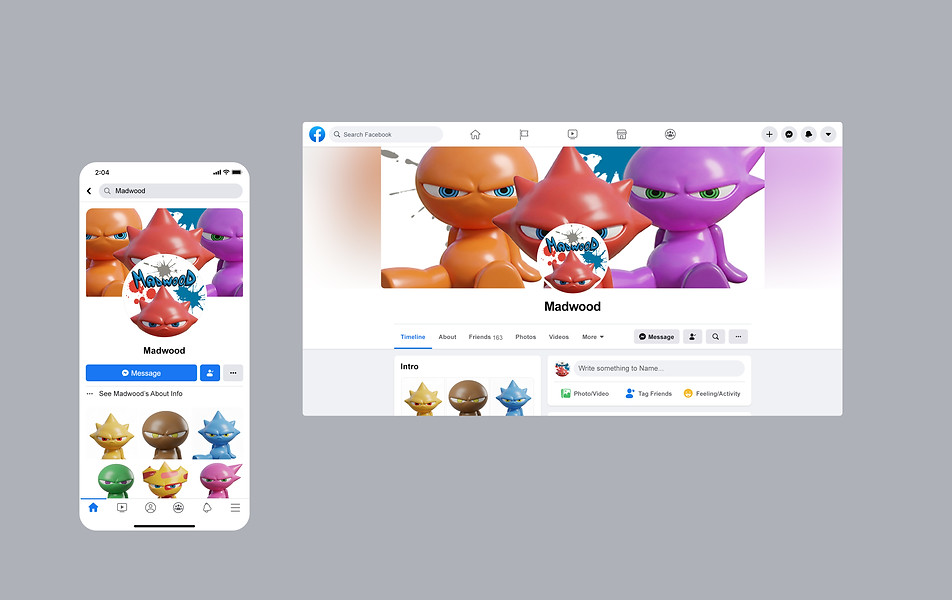
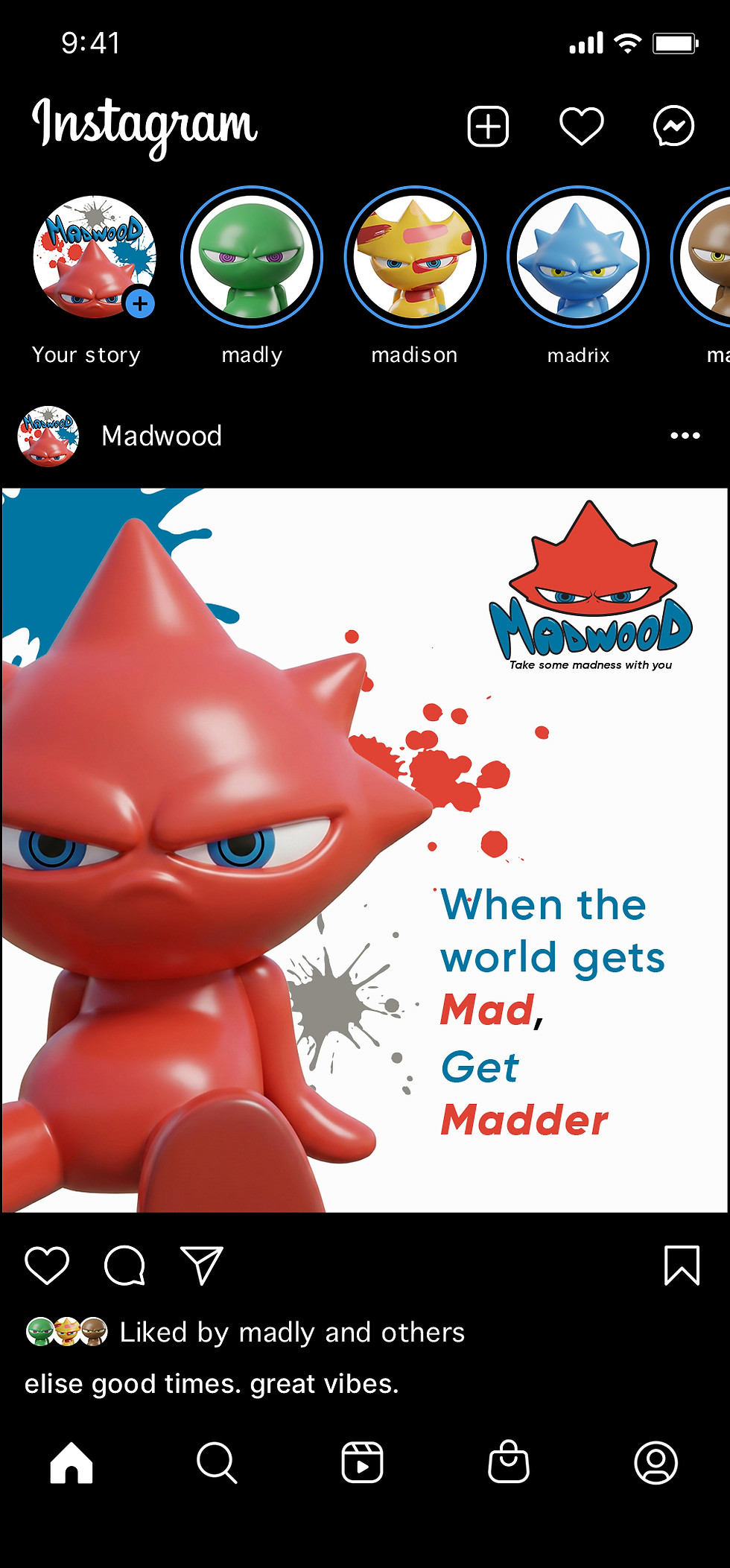
If on-brand letterhead packages build professional trust, social media acts as the heart of consumer- brand interaction. Developing the digital presence for Madwood involved a dedicated effort to showcase the brand's unique identity while encouraging active consumer involvement. This deliberate approach keeps the brand consistent and connected across the entire digital landscape.
Swag
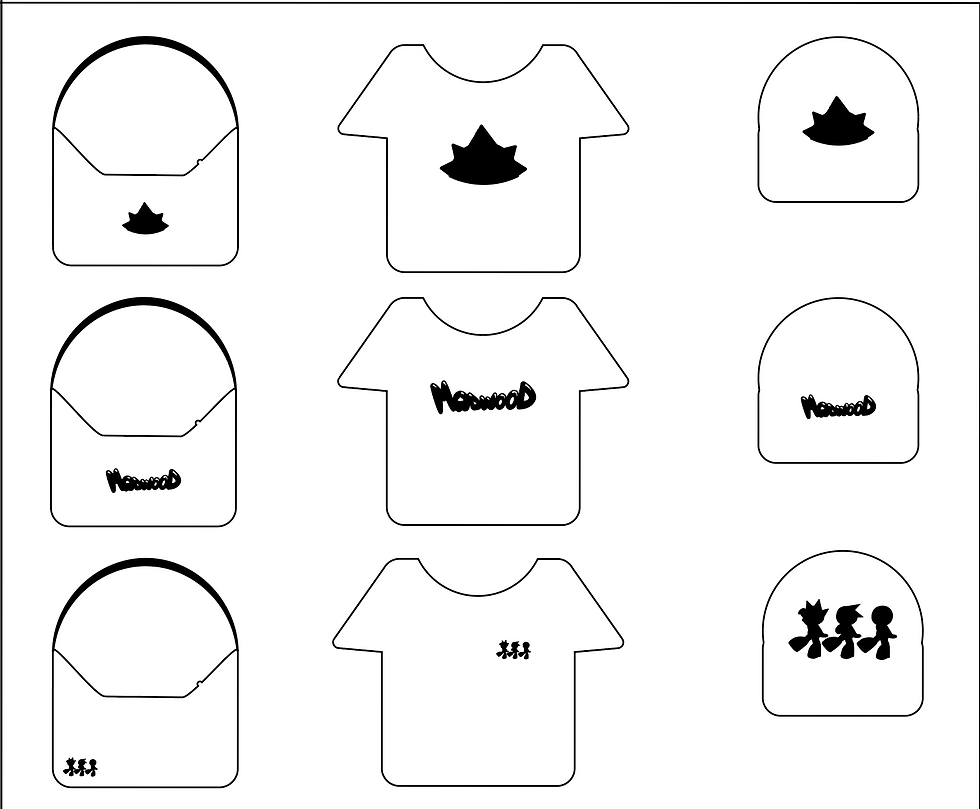
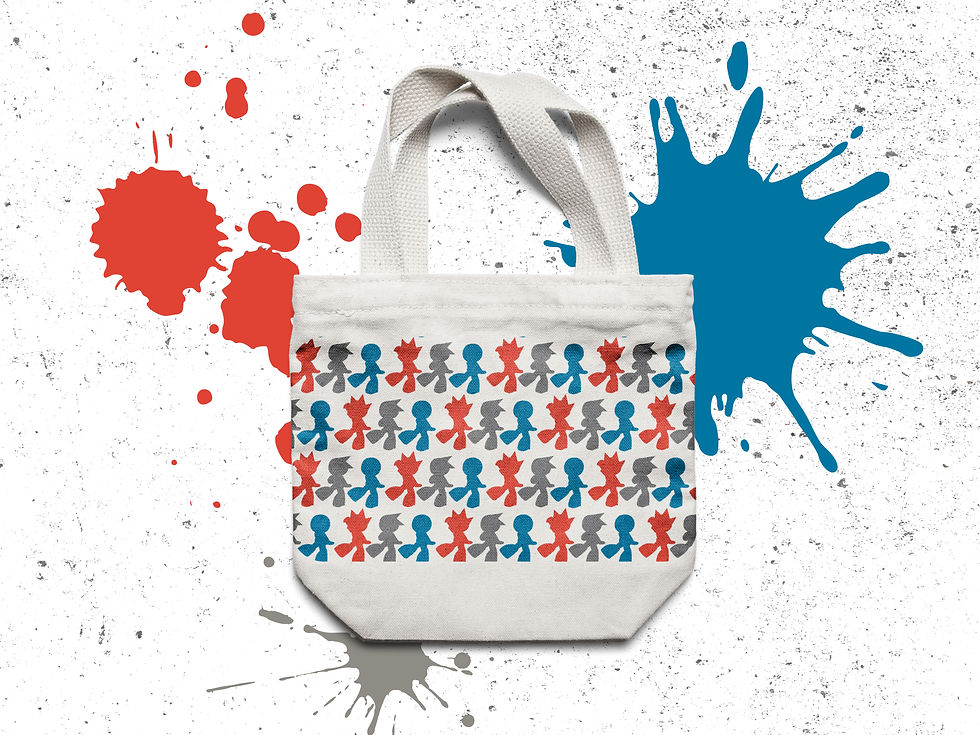
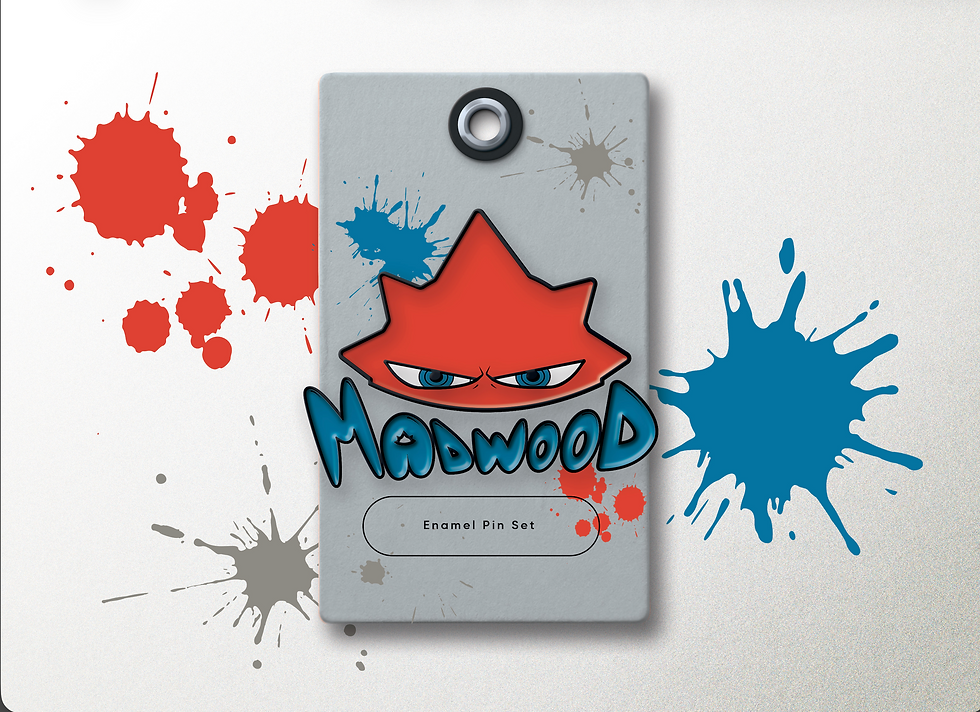
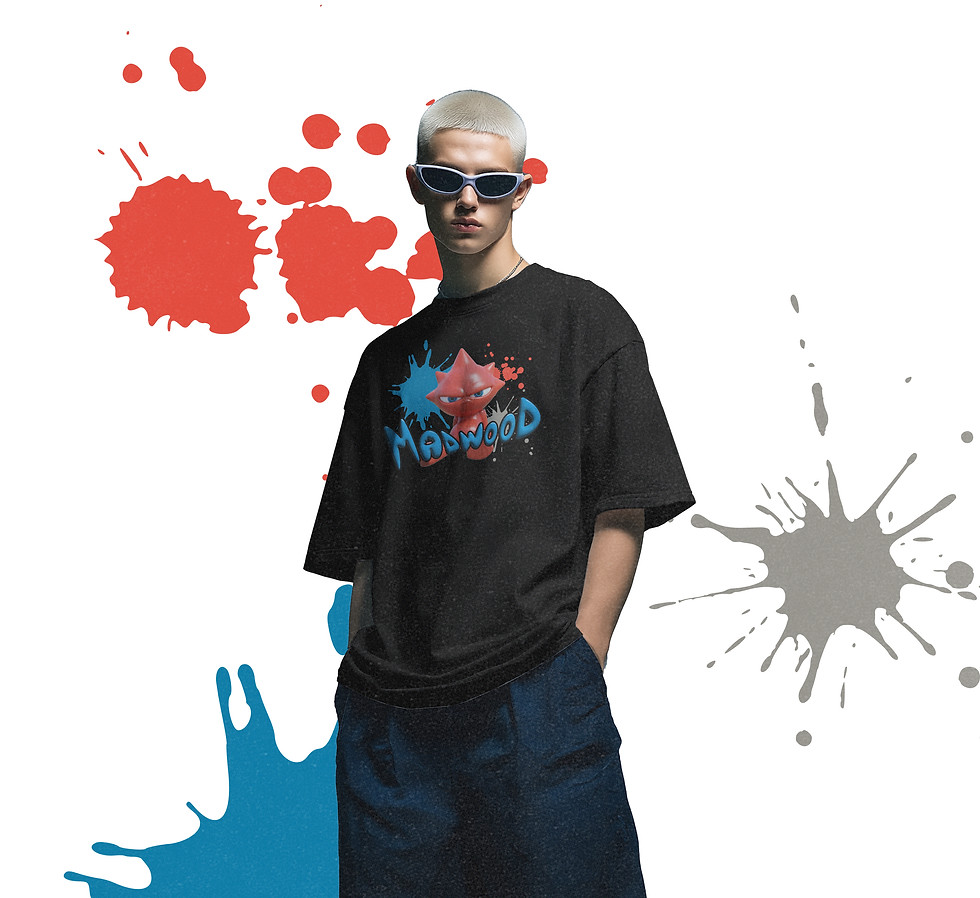
At its heart, the Madwood brand identity is built on the theme of exhibition. While the wearable charms inherently embody this, promotional merchandise offers a fresh avenue to expand the brand's narrative. Drawing heavy influence from contemporary streetwear, the swag collection targets a youth demographic. Priority was placed on items essential to modern self-expression, creating a curated range of caps, tees, totes, and enamel pins.


References
Airey, D. (2026). Chapter 2. In Logo Design Love: A Guide to Creating Iconic Brand Marks, 3rd Edition. essay, New Riders.
Bokhua, G. (2022). Chapter 2. In O’reily Learning. essay, Rockport Publishers.
Garcia, M. (2024, August 22). 8 curved lines in painting composition. Ying McLane. https://yingmclane.com/8-curved-lines-in-painting-composition/
Kramer, L. (2022). Color meanings and the art of using color symbolism. 99 Designs. https://99designs.com/blog/tips/color-meanings/
McDaid, J. (2025, February 11). Youth marketing: Top 10 trends. Digital Marketing Institute. https://digitalmarketinginstitute.com/blog/youth-marketing
O’Loughlin, K. (n.d.). Gen Z and Gen Alpha want brands that understand their passions | Creativebrief. Creative Brief. https://www.creativebrief.com/bite/trend/guest-trend/gen-z-and-gen-alpha-want-brands-understand-their-passions
Shmarel, S. (2025b, December 10). What is a combination logo. Tailor Brands. https://www.tailorbrands.com/blog/combination-logo
Urban Optiks. (2025, March 25). Eyes in advertising: The Power of Visual Persuasion. Urban Optiks Optometry. https://www.uoosd.com/eyes-in-advertising